The nozzle and the sensor are in different locations and offset on both axes, so with wonky mechanics this leads to a difference between the sensor readings and the actual distance to the nozzle.
If you move the sensor so it’s aligned with the nozzle on one axis, the difference between the sensor data and the actual nozzle position becomes much smaller.
🇷🇺 Оригинал
Сопло и датчик находятся в разных местах и смещены по обеим осям, в связи с чем при кривой механике это приводит к разности показания замеров датчика и фактического расстояния до сопла.
Перемещая датчик в ровень одной оси с соплом, разница между данными с датчика и фактическими от сопла становится сильно меньше.
Roughly speaking, with the sensor mounted like that, its readings may indicate a rise, but when the nozzle gets there, it could actually be a dip.
It isn’t handled in software, and on top of that, even Klipper calibration doesn’t help eliminate it.
🇷🇺 Оригинал
Грубо говоря при таком расположении датчика его показания могут указывать на подъем, а когда туда сопло приедет, там будет спад.
Программно оно не учитывается, и мало того, даже калибровка Клиппера не помогает устранить это.
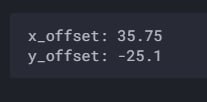
Exactly. When I was drawing Kapton tape strips for bed leveling, I was lining them up based on the nozzle, but I should’ve used the sensor. Are those values in millimeters?
🇷🇺 Оригинал
Точняк. Я когда рисовал полосы для выравнивания стола каптоном рисовал их ориентируясь по соплу а надо было по датчику. Эти значения в милиметрах?
Yeah, I saw it and was wondering why the grid was offset relative to the nozzle then I went around measuring the “correct” point positions, and completely forgot that the nozzle and the sensor are two different things
🇷🇺 Оригинал
видел и еще удивился почему сетка смещена относительно сопла🌚потом ходил и измерял “правильное” расположение точек а то что сопло и датчик это разные сущности я благополучно забыл🌚
 then I went around measuring the “correct” point positions, and completely forgot that the nozzle and the sensor are two different things